Bulletproof mechanism:
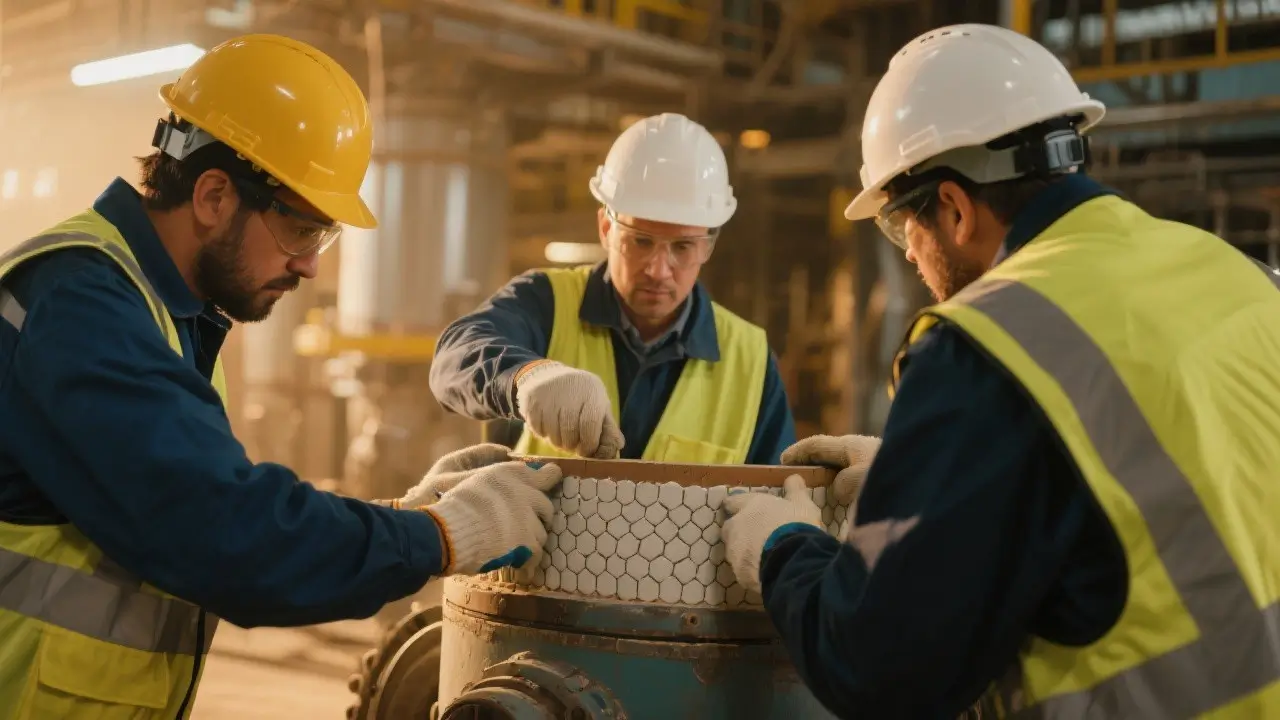
Ceramics are bulletproof because of their high specific stiffness, high specific strength, and chemical inertness in many environments. What makes it better than metal is that metal materials undergo plastic deformation and absorb energy when resisting bullet impact, while ceramics hardly undergo plastic deformation. Bullets can become dull or even broken due to their high strength and hardness characteristics.
The bulletproof layer is composed of bulletproof ceramics and high-strength and high modulus fiber composite panels. When a high-speed projectile collides with the ceramic layer, the ceramic layer fractures or cracks, and diffuses around the impact point, consuming most of the energy of the projectile. Subsequently, the high modulus fiber composite panel further consumes the remaining energy of the projectile. Therefore, its application in armor systems is very attractive and has become a widely used protective armor for bulletproof vests, vehicles, aircraft and other equipment.
Product Structure:
The molecular formula of alumina is Al ₂ O3, which has many homogeneous and heterogeneous crystals. There are mainly three crystal forms, namely α - Al ₂ O3, β - Al ₂ O3, and γ - Al ₂ O3, which have different structures and properties. Among them, the structure of α - Al ₂ O3 is the most stable, also known as corundum. At high temperatures above 1300 ℃, Al ₂ O3 is almost completely transformed into α - Al ₂ O3. The main component of alumina bulletproof ceramics is it.
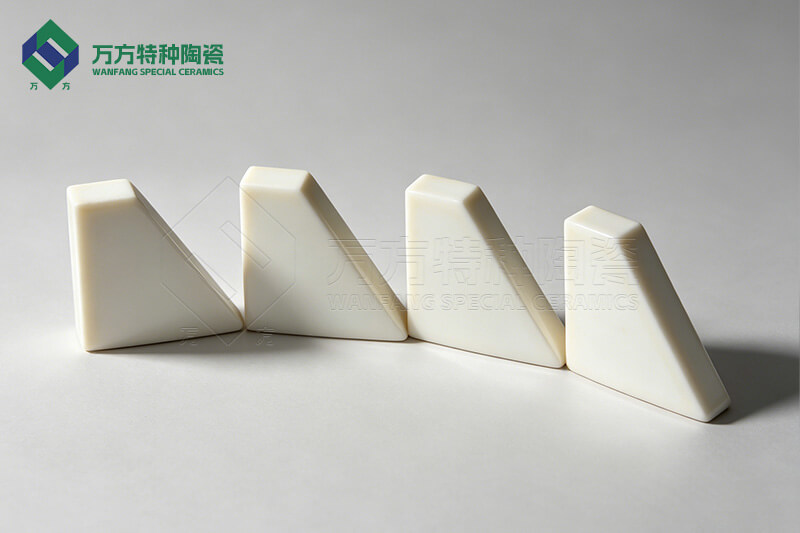
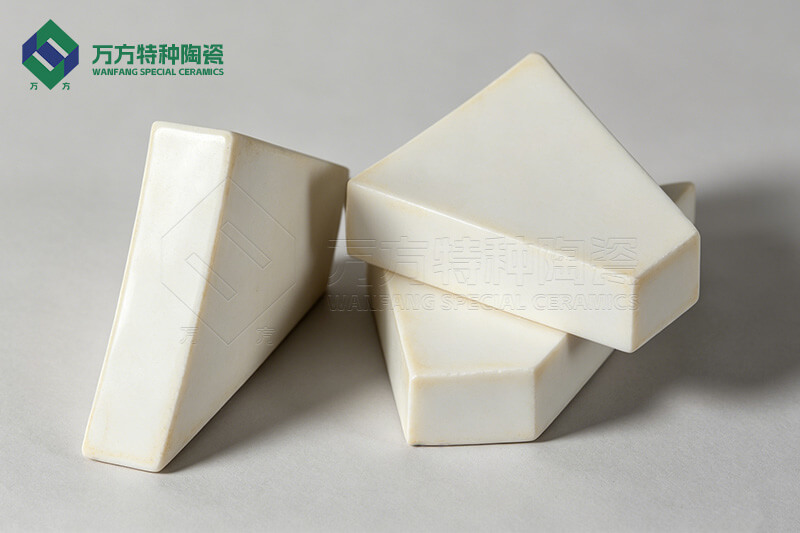
The alumina arc-shaped ceramic bulletproof sheet produced by Wanfangte Ceramics has an alumina content of 99% and a Rockwell hardness of up to 88. Through military target shooting experiments, the product has strong resistance to bullet impact and can withstand the pressure shock wave of bullets, performing well in target shooting experiments.
Application:
The lining of bulletproof vests of grade three or above, and the protective device for tanks and armored vehicles.